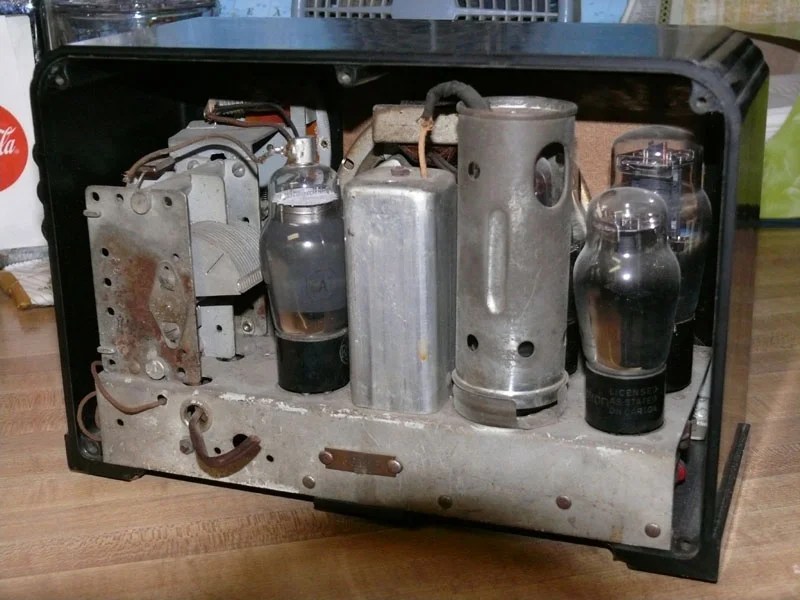
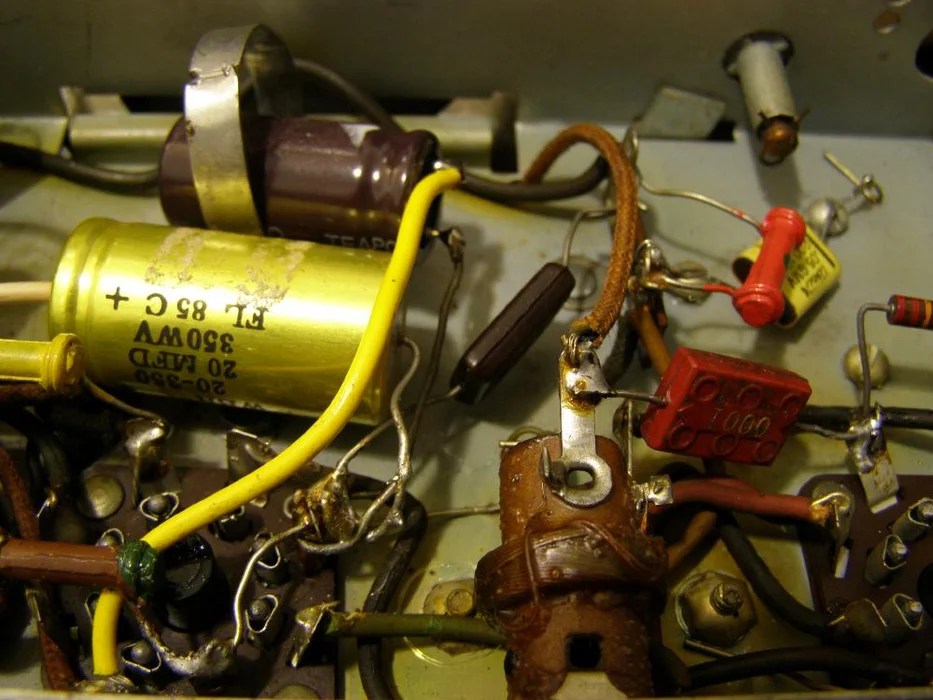
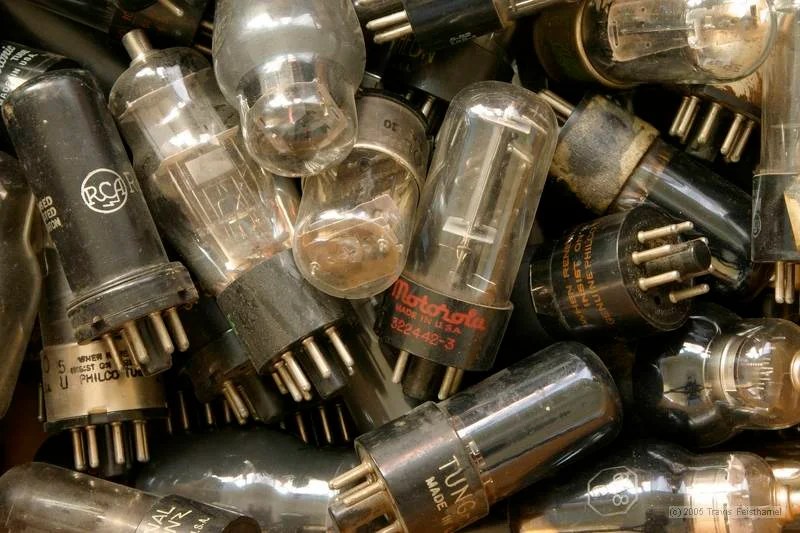
One of the benefits of Dad’s sideline business in TV and radio repair was that it gave me access to lots of spare parts. Dad worked on old tube models rather than transistor-and-printed circuit models, so when someone offered him an unwanted TV or radio, he gratefully accepted and added it to the collection. Often he could repair the item, which he would give to anyone who needed it (he never sold a salvaged model as far as I can remember). If it was beyond repair, he would take it apart and add the tubes, capacitors, and potentiometers to his boxes of parts. After he had removed all the reusable pieces, he would strip the metal chassis of any old wires and add it to the pile of chassis.
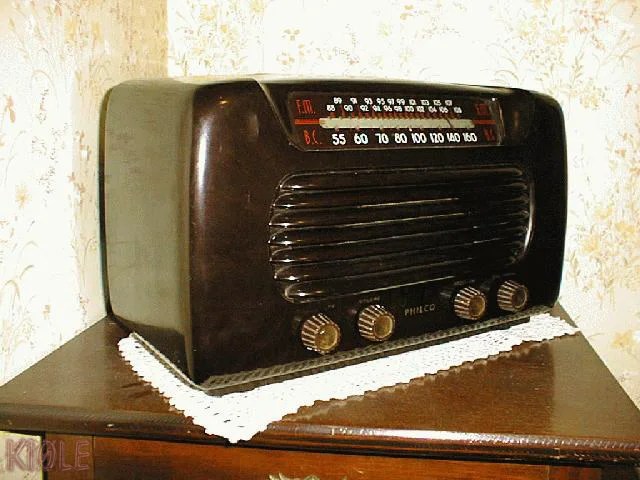
He also had his books from his mail-order TV and repair course from Massey Institute of Technology (he was an MIT graduate, we used to joke). One part of many of the lessons was an assignment, which was often a step-by-step project to build an electronic instrument or device. I remember he built a nice signal generator and a tube-checker, both of which he used in his repair business to diagnose problems.
One of the easier assignments was to rewire an old radio to make it into an audio amplifier. I got his permission to build that project as a science fair project in my freshman year of high school. I had a lot of fun using his soldering gun and spare parts on the project, although I did learn a shocking lesson about grabbing a bare radio chassis while standing barefoot on a damp concrete basement floor. Turns out, even a slight electrical flow can rattle your teeth under those conditions.
My audio amplifier didn’t win at the science fair, but I did get my picture in the local paper holding the microphone to the Biology teacher’s chest, even though I told the reporter/photographer it wouldn’t pick up a heart beat. He said it wouldn’t matter, because the newspaper didn’t have sound and no one would know. Incidentally, the rumors are true that the teacher’s name really was Jack Haas (pronounced “hass”).
At some point, I found directions to build a short range radio transmitter. I asked Dad if I could try it, and after making me confirm that it would be legal – in those days, that meant a search through the local library for the FCC regulations – he said okay.
This project was a little more challenging, so the gathering of the parts and the construction took awhile, but I did eventually get it built. We worked out a test to make sure it worked but did not have enough range to make it illegal. I rigged up our record player to play a song while Dad drove me up and down our road with the car radio tuned to my frequency. It worked perfectly! We could hear our record play for about a quarter of a mile, but not beyond. I was in the radio business, I realized with a growing sense of excitement. I might be the next Jack Gale (the morning DJ on Charlotte’s WAYS) or even Arthur Godfrey or Paul Harvey!
As soon as I could get set up, I took the microphone in my hand and started my first radio show. I talked about what was happening with the new station and how I would broadcast whenever I could, recognizing that school and chores would take up some of my time.
In spite of my initial excitement, I signed off permanently within days. Turns out, I was better at building radios than broadcasting. After a few minutes, I couldn’t think of anything to say.

 Rabbit Box Blog
Leave a comment